
Supreme Court Judgments Will Redefine 2027 Battleground for Opposition Parties
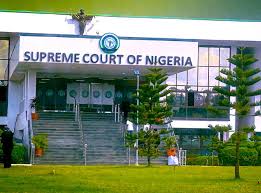
Nigeria’s Supreme Court holds the fate of two major opposition parties, the Peoples Democratic Party (PDP) and the African Democratic Congress (ADC), as it reserves judgments in their protracted leadership battles. These rulings will critically shape the 2027 election landscape, determining if a robust multi-party system endures or if the nation slides further towards a dominant one-party state.
The Supreme Court now wields the power to fundamentally alter Nigeria’s political trajectory ahead of the 2027 general elections. With judgments reserved in the contentious leadership disputes plaguing the Peoples Democratic Party (PDP) and the African Democratic Congress (ADC), the apex court’s pronouncements will either fortify a vibrant multi-party democracy or accelerate the nation’s drift towards a de facto one-party state.
Last Wednesday, a five-member panel of Supreme Court justices confirmed the reservation of judgments after lawyers representing all parties adopted their briefs. This critical announcement leaves promoters and supporters of both opposition parties in anxious suspense, anticipating decisions that carry profound strategic weight.
The Peoples Democratic Party’s internal war pits loyalists of the Minister of the Federal Capital Territory (FCT), Nyesom Wike, against critical stakeholders led by Oyo State Governor, ‘Seyi Makinde. Both factions vie for ultimate control of the PDP, a struggle rooted in last year’s national convention held in Ibadan, which initially produced the Tanimu Turaki-led national executive.
Legal challenges began when Austin Nwachukwu and two other PDP chieftains dragged the Ambassador Iliya Damagum-led national executive before Justice James Omotosho of the Federal High Court. They cited alleged non-compliance with party guidelines and the Electoral Act. Separately, former Jigawa State Governor, Sule Lamido, challenged his exclusion from the same convention before Justice Peter Lifu, also of the Federal High Court. Though both courts ordered the PDP to halt the convention, the party proceeded, relying on a conflicting order from an Oyo State High Court. This led the Court of Appeal to nullify the Ibadan convention, instead recognising the faction loyal to Nyesom Wike. The Turaki-led executive then escalated the matter to the Supreme Court, with their lawyer, Chief Chris Uche (SAN), arguing that lower courts erred by assuming jurisdiction over the PDP’s internal affairs.
ADC's Leadership Tangle and INEC's Role
The African Democratic Congress (ADC) faces a similar existential crisis, with former Senate President, Senator David Mark, and former Deputy National Chairman, Hon. Nafiu Bala Gombe, both claiming the national chairmanship. The crisis escalated when the Independent National Electoral Commission (INEC), after initially endorsing Senator Mark’s leadership, derecognised him, citing an order from the Court of Appeal. This move fueled widespread allegations that the ruling All Progressives Congress (APC) uses INEC to destabilise opposition parties and prevent formidable challenges against President Bola Tinubu in 2027.
Jibrin Okutepa (SAN), representing Senator David Mark, urged the Supreme Court to uphold previous precedents, specifically a March 21, 2025 judgment, which affirmed that “No court has jurisdiction to entertain cases bordering on internal affairs of political parties.” He insists the trial court lacked jurisdiction in the ADC matter. Conversely, Robert Emukpero (SAN), counsel for the first respondent, Hon. Nafiu Bala Gombe, argues for the rejection of Mark’s appeal, seeking affirmation of the lower court’s judgment that deemed the appellant’s case premature.
The Specter of a One-Party State
With the Supreme Court deliberating, many Nigerians question whether these judgments will genuinely foster robust multi-party democracy or accelerate the nation’s perceived slide into a one-party system. The APC currently governs 32 states, triggering alarms about a democratic imbalance and a lack of virile opposition capable of holding the ruling party accountable.
Political analysts now consider the Wike-controlled faction of the PDP as effectively an appendage of the APC. Minister Wike's vocal support for President Bola Tinubu’s second term bid solidifies fears that the PDP, under his influence, might tacitly back Tinubu in the 2027 presidential race. Similarly, projections suggest the APC aims to control the ADC, potentially through Hon. Nafiu Bala Gombe, thereby frustrating the presidential ambitions of leading opposition figures.
A worrisome trend confirms alleged alliances between APC agents and minority factions within both opposition parties. Nyesom Wike, despite his current role in the APC government, leads the court-recognised faction of the PDP. Further reinforcing this narrative, Hon. Leke Abejide, the ADC member representing Yagba Federal Constituency of Kogi State, openly aligns with Hon. Nafiu Bala Gombe against Senator David Mark. Abejide is a strong ally of the Chief of Staff to the President, Hon. Femi Gbajabiamila, who recently pledged support to Gombe to “scatter” the ADC during Abejide's wedding anniversary in Abuja. Gbajabiamila's remarks unequivocally signal APC backing for Gombe, aiming to bring both the PDP and ADC under the ruling party’s strategic influence.
The Supreme Court faces a monumental decision. Its judgments will either hand control of two critical opposition platforms to forces perceived to be working for the APC, or it will empower these parties to mount a genuine challenge, safeguarding Nigeria’s democratic future. Leading opposition figures, their presidential ambitions hanging in the balance, join millions of Nigerians in awaiting this defining moment.
Help surface this story to your network.
Related stories
AI-Powered Nigerian Election Intelligence Platform Launches Ahead of 2027
Ruzzen, Nigeria's first independent AI-powered political intelligence platform, launches ahead of the 2027 elections - covering every candidate, free.
Obi, Kwankwaso's ADC Exit: A Reckoning for Nigeria's 2027 Election Cycle
Peter Obi and Rabiu Musa Kwankwaso's dramatic exit from the African Democratic Congress (ADC) reshapes Nigeria's political landscape, signaling a deep loss of confidence in the party system. This strategic withdrawal highlights how legal uncertainties and judicial interventions now dictate political viability, not just internal party dynamics. The move forces a critical look at the true strength of Nigeria's democracy ahead of the 2027 general elections.
Datti Baba-Ahmed: Obi-Kwankwaso 2027 Alliance Lacks Northern Support, Leadership Questioned
Datti Baba-Ahmed, former Labour Party VP candidate, declares northern Nigeria will not back a Peter Obi and Rabiu Kwankwaso presidential ticket in 2027. He also sharply criticizes Obi's "walk away" approach to party crises, arguing it betrays weak leadership ahead of crucial political realignments.
The Oracle
INTELLIGENCE ANALYST
Join the intelligence network.
Daily political intelligence delivered at 7am. You are the stakeholder.
50,000+ Nigerians. Free intelligence. Every morning at 7am.