
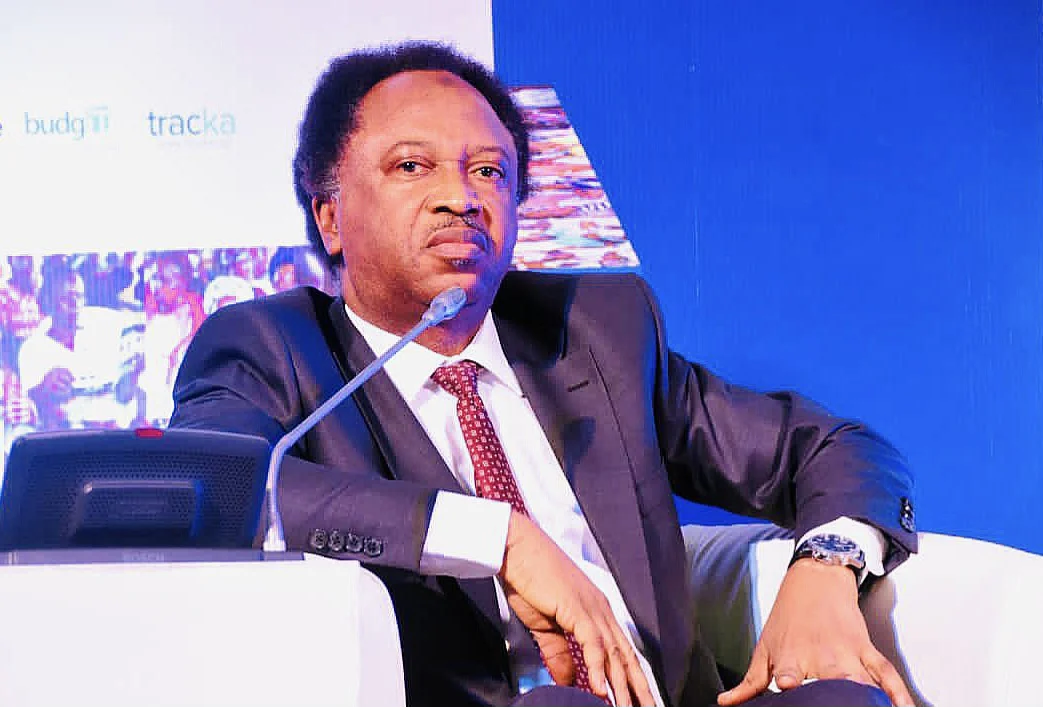
Sani Declares Ideological Unity Among Political Titans, Predicts Tinubu's 2027 Victory
Former Kaduna Central Senator, Shehu Sani, delivers a political bombshell, asserting that President Bola Ahmed Tinubu, former Vice President Atiku Abubakar, former President Olusegun Obasanjo, and Mr. Peter Obi all operate from the same ideological playbook. Sani confidently predicts President Tinubu's re-election in 2027, dismissing claims of significant ideological divergence among the nation's key political players.
Former Kaduna Central Senator, Shehu Sani, delivers a seismic declaration on Nigeria’s political landscape, asserting that the nation’s most prominent figures—President Bola Ahmed Tinubu of the All Progressives Congress (APC), former Vice President Atiku Abubakar of the Peoples Democratic Party (PDP), former President Olusegun Obasanjo, and Mr. Peter Obi of the Labour Party—are ideologically indistinguishable. Sani does not mince words, confidently predicting President Tinubu's victory in the 2027 general elections. This audacious claim reshapes the narrative around opposition unity and the ideological battles expected in the upcoming election cycle.
Sani critically examines the support base for Mr. Peter Obi, the Labour Party's presidential candidate in the last election. He argues that Obi’s backing is predominantly tribal, drawing heavily from his ethnic background. "The support for Peter Obi is tribal; many of the people supporting him are people who come from his ethnic background," Sani states, offering a biting assessment that "If Obi becomes the President of Nigeria today, nothing changes, everything remains the same." This suggests a continuity of governance style and policy direction regardless of who occupies Aso Rock from this group of political juggernauts.
The former lawmaker reinforces his core argument: President Bola Ahmed Tinubu, former Vice President Atiku Abubakar, former President Olusegun Obasanjo, and Mr. Peter Obi fundamentally share the same political ideology and subscribe to identical schools of thought. For Sani, their differences are superficial, masking a deeper, shared belief system that governs their approach to power and governance. This perspective challenges the perceived ideological divides often amplified in Nigerian political discourse.
A Unified Political Class?
Sani extends his critique beyond the current political class, recalling his time in the Senate during the administration of former President Muhammadu Buhari. He highlights a disconcerting silence from the North regarding widespread insecurity—including mass killings and kidnappings—that plagued the region. Sani recounts how his efforts to address the plight of his people were met with hostility, particularly from his Northern colleagues in the Senate. This experience, he implies, reveals a deep-seated political pragmatism, or perhaps complicity, that transcends party lines when power dynamics are at play.
Sani's direct prediction of President Tinubu's 2027 re-election casts a long shadow over the nascent efforts by opposition parties to forge a formidable coalition. If, as Sani suggests, the ideological playing field is level, then the battle for 2027 becomes less about distinct policy alternatives and more about personality, party machinery, and regional calculus. His assertion puts pressure on opposition figures to articulate genuinely different visions, or risk being seen as mere continuations of the status quo.
Implications for Opposition Strategy
Ruzzen understands that Sani's pronouncements, while controversial, force a critical re-evaluation of Nigeria's political fault lines. Are the perceived ideological battles truly about differing philosophies, or merely a contest among a closely-knit political elite? The answer holds significant implications for voter engagement and the future direction of the nation.
For now, Sani's confident pronouncement ensures the 2027 race begins with a stark reminder: the political class, regardless of party affiliation, might be more united in thought than the public believes.
Help surface this story to your network.
Related stories
Obi, Kwankwaso Join New NDC; Remake 2027 Opposition Landscape
Former presidential aspirants Peter Obi and Rabiu Kwankwaso now anchor the nascent Nigeria Democratic Congress, signalling a bold realignment for the 2027 general election. Their move, following Obi's exit from the African Democratic Congress, positions NDC as a fresh battleground against established parties.
Obi, Kwankwaso's ADC Exit: A Reckoning for Nigeria's 2027 Election Cycle
Peter Obi and Rabiu Musa Kwankwaso's dramatic exit from the African Democratic Congress (ADC) reshapes Nigeria's political landscape, signaling a deep loss of confidence in the party system. This strategic withdrawal highlights how legal uncertainties and judicial interventions now dictate political viability, not just internal party dynamics. The move forces a critical look at the true strength of Nigeria's democracy ahead of the 2027 general elections.
Datti Baba-Ahmed: Obi-Kwankwaso 2027 Alliance Lacks Northern Support, Leadership Questioned
Datti Baba-Ahmed, former Labour Party VP candidate, declares northern Nigeria will not back a Peter Obi and Rabiu Kwankwaso presidential ticket in 2027. He also sharply criticizes Obi's "walk away" approach to party crises, arguing it betrays weak leadership ahead of crucial political realignments.
The Oracle
INTELLIGENCE ANALYST
Join the intelligence network.
Daily political intelligence delivered at 7am. You are the stakeholder.
50,000+ Nigerians. Free intelligence. Every morning at 7am.