
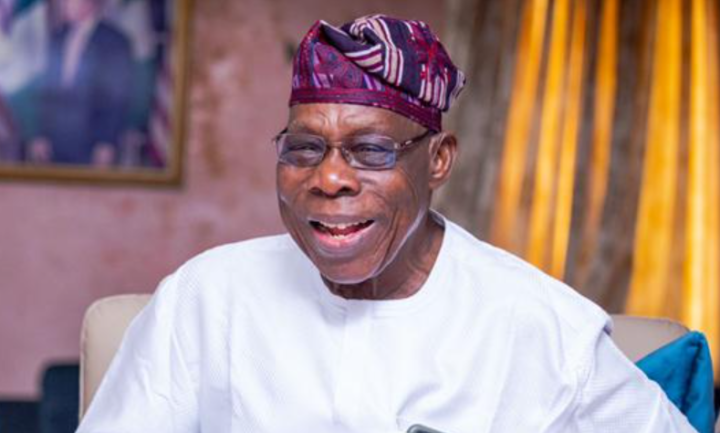
Olusegun Obasanjo Slams Tinubu's ECOWAS Stance, Declares Insecure Government Forfeits Right to Exist
Former President Olusegun Obasanjo delivers a scathing verdict on Nigeria's leadership, asserting that any government failing to secure its citizens forfeits its right to exist. He critiques President Bola Ahmed Tinubu's handling of the ECOWAS crisis and dismisses NNPC refineries as beyond repair.
Former President Olusegun Obasanjo delivers a direct warning to Nigeria's political class: any government that cannot guarantee the security of its people has no right to exist. His stark assessment cuts across pervasive insecurity, the nation's diminishing international influence, and the current administration's missteps in regional diplomacy.
Obasanjo points directly to poor leadership as the root of Nigeria's deepening challenges. He notes the country's lost standing in international affairs and its mishandling of critical regional relationships, particularly within the Economic Community of West African States (ECOWAS). Nigeria, he insists, is conspicuously absent from the global decision-making table, a clear symptom of a broader leadership deficit.
A Nation Adrift on Security and Diplomacy
The outspoken former leader maintains that Nigerians must not accept kidnapping and other violent crimes as a norm. He recalls a time when citizens traveled freely across the country, contrasting it sharply with the present state where insecurity has become a disturbing fixture. Obasanjo forcefully argues that an administration failing to guarantee safety forfeits its fundamental right to govern.
He traces the roots of this escalating crisis back to the post-civil war arms proliferation, a problem compounded by decades of poor governance and neglect. External factors, such as the return of armed mercenaries following the fall of Libya's Muammar Gaddafi, and the internal use of armed groups for political purposes, further fuel the insecurity. Obasanjo warns that an estimated 20 million out-of-school children represent a long-term security risk, serving as a ready pool for future extremist recruitment.
Obasanjo specifically criticizes President Bola Ahmed Tinubu, of the All Progressives Congress, Lagos State, for his administration's handling of relations with neighbouring Niger Republic following the recent coup. He describes the response as ill-conceived, damaging decades of meticulously built regional cooperation. Nigeria's actions—including border closures, cutting electricity supply, and financial restrictions—undermine deep-rooted historical, economic, and cultural ties between the two nations, he argues.
The former president recalls Nigeria’s reliance on Niger during the civil war and for hydroelectric power from Kainji Dam, highlighting the profound interdependence now jeopardized. He states emphatically that Nigeria’s decisions on the Niger crisis reveal a fundamental lack of understanding at the highest levels of government. Effective leadership, he concludes, is the crucial missing ingredient in Nigeria’s current trajectory.
Refineries, Council of State, and The One-Party Threat
Beyond security and diplomacy, Obasanjo dismisses the National Council of State as irrelevant, calling participation in its meetings a waste of time. He views the body as purely advisory, its recommendations frequently ignored, rendering it ineffective for meaningful policy influence.
On the economy, the former president reiterates his long-held skepticism regarding government-owned refineries under the Nigerian National Petroleum Company Limited (NNPC). He states these facilities will never work efficiently, citing structural inefficiencies, poor maintenance, corruption, and a lack of scale as insurmountable hurdles. Obasanjo contrasts the billions spent on NNPC refineries with the success of privately driven ventures like the Nigeria LNG project, advocating for public-private partnerships as a more effective model.
Finally, Obasanjo warns against the emergence of a one-party state, insisting it would be detrimental to Nigeria’s development and democratic health. While acknowledging President Tinubu’s assurance against such a system, he maintains that a single-party dominance would ultimately fail to serve the nation's best interests. Despite his profound criticisms, Obasanjo holds onto the belief that Nigeria can still recover, provided there is a fundamental shift in leadership quality and governance approach.
Help surface this story to your network.
Related stories
The Oracle
INTELLIGENCE ANALYST
Join the intelligence network.
Daily political intelligence delivered at 7am. You are the stakeholder.
50,000+ Nigerians. Free intelligence. Every morning at 7am.